
Winter gas bills have a way of showing up like an unwelcome houseguest, and they often arrive right when budgets are already stretched. The good news: heating is the one part of your bill you have the most control over, and small changes add up fast.
This guide walks through how to lower your gas bill in winter, from free habit changes to low-cost fixes to help programs for tight budgets. Start at the top and work down as far as makes sense for you.
Quick answer: To lower your gas bill in winter, turn the thermostat down a few degrees for the hours you are asleep or away, seal drafts, replace the furnace filter, close off unused rooms, and use sunlight and warm layers. Then call your utility about budget billing, a free energy audit and assistance programs. Savings vary by home and climate, but stacking several steps can trim a meaningful share of heating costs.
First, understand why your winter gas bill jumps
For most homes with gas heat, the furnace is the biggest gas user, and it runs more the colder it gets. Water heating, cooking and a gas dryer add to the total. When the temperature drops, your usage climbs, and your bill follows.
Two things can push the bill up: you used more gas, or each unit of gas cost more. Your bill shows usage in therms or CCF (units of gas volume or energy), plus a price per unit. Compare usage to the same month last year to see which one is driving the change.
Check your bill for estimated readings
If your meter was not read, the utility may have estimated your usage. Estimates can run high one month and low the next, then “true up” later. Look for an “estimated” note on your bill, and ask your utility if you can submit your own meter reading.
Free fixes: lower your gas use without spending a dime
Start here. These changes cost nothing and can be done today.
- Lower the thermostat when you can. Dropping the setting several degrees while you sleep or are out of the house reduces how long the furnace runs. Choose the lowest level that is safe and comfortable for everyone at home.
- Open curtains on sunny days, close them at night. South-facing windows let in free heat during the day. Closing drapes after dark adds a layer of insulation.
- Close vents and doors in unused rooms. Heating a spare room no one enters is wasted gas. Keep the door closed, but avoid shutting off too many vents on a forced-air system, since that can strain the equipment. Check your furnace guidance if unsure.
- Dress for the season. Sweaters, socks, slippers and a throw blanket let you feel comfortable at a lower setting.
- Use ceiling fans in reverse. If your fan has a winter setting, running it on low pushes warm air that collects near the ceiling back down.
- Run the water heater smarter. Shorter showers and washing laundry in cold water cut gas used for hot water.
- Skip the fireplace draft. Close the damper when the fireplace is not in use, since an open flue sends heated air straight up the chimney.
The cheapest heat is the heat you never have to make, so stop it from escaping first.
Thermostat settings that save without suffering
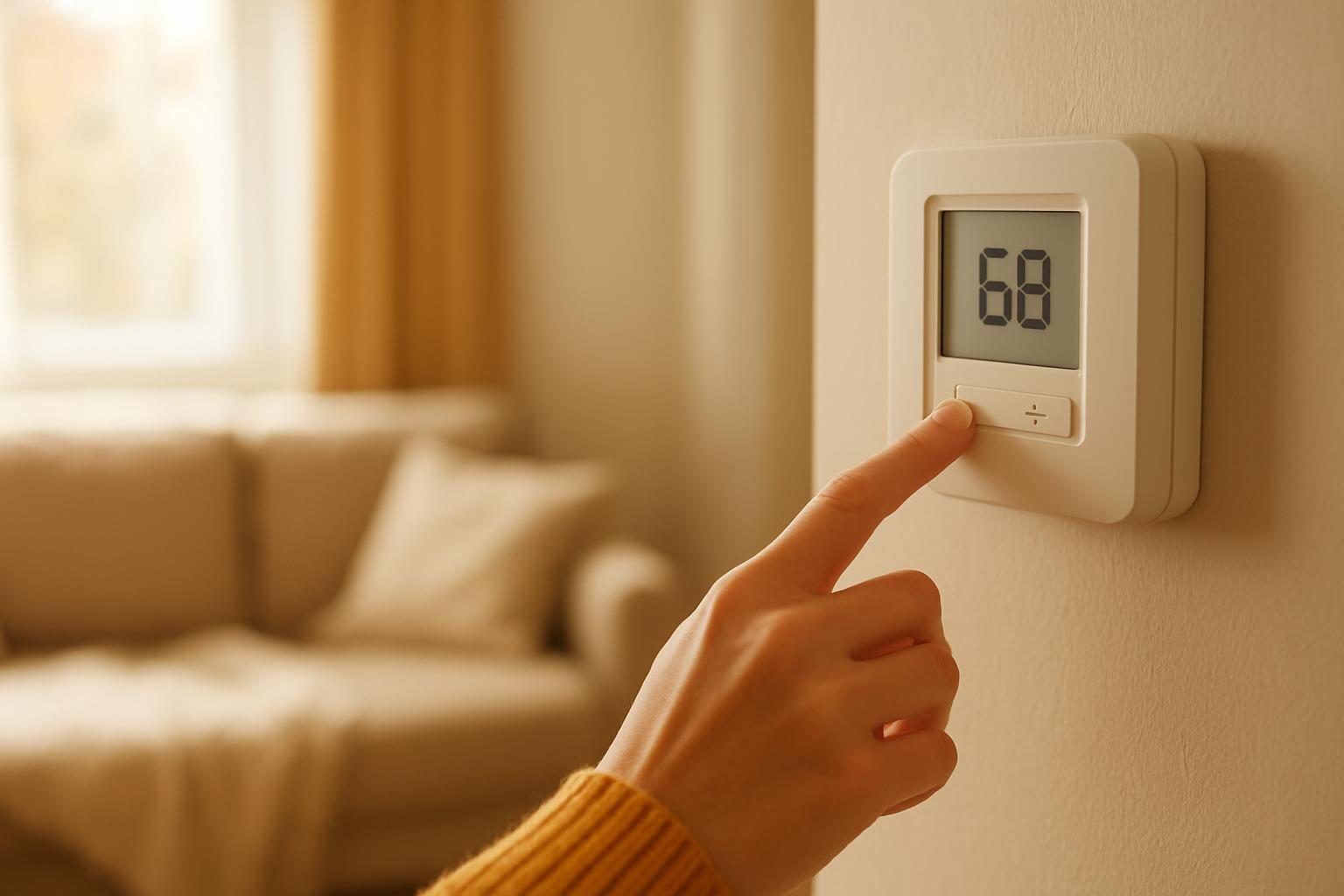
Many households land around 68 degrees for waking hours and lower overnight or when away. Every home is different, and some people need it warmer for health reasons. Do not cut heat in a way that puts infants, older adults or people with medical conditions at risk.
If you want the details on dialing it in, our upcoming guide on the best thermostat setting to save money covers settings by season and schedule.
Do you need a smart thermostat?
Not necessarily. A basic programmable thermostat you actually use can save as much as an expensive smart one. The savings come from the schedule, not the gadget. Smart models help if you like adjusting from your phone, and some utilities offer rebates on them, so ask before you buy.
Low-cost upgrades that pay for themselves
A little spending can lock in savings all winter. These are budget-friendly and often do-it-yourself.
| Fix | Typical cost | Where it helps most |
|---|---|---|
| Replace furnace filter | About $5-$25 | Easier airflow, less strain on the furnace |
| Weatherstripping for doors | About $5-$20 per door | Stops cold air leaks |
| Caulk around windows | About $5-$15 per tube | Seals gaps where air sneaks in |
| Window insulation film | About $10-$30 per kit | Adds a barrier on older single-pane windows |
| Door draft stopper | About $5-$20 | Blocks the gap under exterior doors |
| Water heater blanket or pipe insulation | About $10-$40 | Reduces heat loss from tank and pipes |
| Programmable thermostat | About $20-$150+ | Automates lower settings |
Prices are rough ranges and vary by store, brand and area. Savings depend on how leaky your home is to start with.
Seal the biggest leaks first
Walk through your home on a windy day and feel for drafts around doors, windows, electrical outlets on exterior walls, attic hatches and where pipes enter. Seal the worst offenders first. Hold a lit incense stick near suspect spots and watch which way the smoke drifts, taking care around anything flammable.
Change the furnace filter on schedule
A clogged filter makes your furnace work harder and can shorten its life. Check it monthly during heating season and replace it when it looks dirty. Your furnace manual will say what size and how often.
Money move: Before buying anything, call your gas or electric utility and ask for a free or low-cost home energy audit. Many utilities offer them and some include free items like weatherstripping or a programmable thermostat. See our guide to getting a free home energy audit from your utility.
Smarter ways to pay: billing and rate options
Using less gas is one lever. How you pay and which plan you are on is another.
Ask about budget billing
Budget billing spreads your annual cost into roughly equal monthly payments so winter does not blindside you. It does not make gas cheaper, but it can make cash flow easier. Details, trade-offs and who it helps are in our guide to budget billing: pros, cons and who it helps.
Shop for a gas supplier if your state allows it
In some states, you can choose a natural gas supplier instead of buying only from your local utility. Rates may be fixed or variable, and introductory prices can jump later. If you are in a state with choice, compare the price per therm, contract length, cancellation fees and what happens when the term ends. Your state utility commission usually runs an official comparison site. For the same approach applied to power, see how to choose an electricity provider in deregulated states.
Can you negotiate a utility bill?
Utility rates are usually regulated, so you cannot haggle the price per unit the way you might with a cable company. But you can often negotiate payment timing, set up a plan or request hardship options. We are putting together a guide on whether you can negotiate your electric bill, and the same ideas apply to gas.
You may not be able to change the rate, but you can often change the payment plan.

Bigger upgrades worth researching
If you own your home and plan to stay, larger projects can reduce winter gas use over time. Cost, payback and available incentives vary a lot, so get multiple quotes and verify details before committing.
Insulation and air sealing
Attic insulation and sealing air leaks are often among the best-value upgrades because they reduce how much heat escapes. An energy audit can show where your home loses the most.
A more efficient furnace or a heat pump
Older furnaces generally waste more fuel than newer high-efficiency models. Some homes also benefit from switching to a heat pump, which can make sense depending on climate, local electricity and gas prices, and available incentives. Watch for our upcoming look at heat pump savings and when the switch pays off.
Rebates and tax credits
Federal, state and utility incentives for efficiency upgrades have changed over time. Check current offers before you buy, because some require approval ahead of installation. Our coming guide to energy efficiency tax credits and rebates will help you know what to check, and your utility and state energy office are good places to confirm what is available now.
If you are struggling to pay your gas bill
If a winter bill is more than you can handle, reach out early. Utilities usually have more flexibility before an account goes far past due.
- Call your utility. Ask about payment plans, hardship programs, extensions and winter shutoff protections. Rules vary by state and company.
- Apply for LIHEAP. The Low Income Home Energy Assistance Program helps eligible households pay heating costs. It is run through state and local agencies. Find your state’s program through the official LIHEAP resources or by calling 211.
- Check local charities and utility funds. Many utilities and community groups run assistance funds, and 211 can point you to what is nearby.
- Look at Benefits.gov. It has a screening tool that can match you with programs you may qualify for.
Eligibility and benefit amounts change and differ by location, so always confirm with the official program office. For a broader list, see every bill help program worth knowing.
Do not forget the rest of your energy picture
If you heat with gas but also pay an electric bill, savings there free up money too. Our complete guide to lowering your electric bill covers lighting, appliances and rates. You can also shave standby costs by tackling phantom energy from devices that drain money while off. For more categories, browse our Utilities & Energy section.
Want a quick look at where your household could cut across all your bills? Try the free Bill Savings Finder.
Bill Reduction Institute may earn referral fees from some partners. That never changes our advice, and we are not a utility, insurer or lender.
Winter gas bill too high? Get a review
Tell us what you pay now and we will follow up with ways to lower it, from do-it-yourself steps to vetted partner offers. Free, with no obligation.
Thanks, we have it.
We will look at what you pay and follow up soon. Meanwhile, try our free negotiation script builder.
Key takeaways
- Compare usage (therms or CCF) to last year to see whether you are using more gas or paying more per unit.
- Free habits like lowering the thermostat while asleep or away and using sunlight are the fastest place to start.
- Sealing drafts and changing the furnace filter are low-cost fixes that can pay off all winter.
- Ask your utility about a free energy audit, budget billing and hardship options before you spend money.
- If money is tight, contact LIHEAP, 211 and your utility early, and confirm current rules with the official source.
Frequently asked questions
Why is my gas bill so high in winter?
Heating is usually the biggest gas use in a home, and the colder it gets outside, the harder your furnace runs. Gas prices can also rise in winter, and a longer billing period or an estimated meter reading can make one bill look bigger. Compare your usage (therms or CCF) to the same month last year, not just the dollar amount, to see whether you are using more or paying more per unit.
What temperature should I set my thermostat to save on gas?
Many households save by setting the thermostat around 68 degrees when home and awake, and lower when asleep or away. Savings vary by home, climate and equipment, but lowering the setting for several hours a day generally cuts heating use. Pick the lowest temperature that is comfortable and safe for everyone in the household, especially infants, older adults and anyone with a health condition.
Is budget billing a good way to lower my gas bill?
Budget billing does not lower what you use or pay over the year, but it spreads costs into a more predictable monthly amount, which can make winter easier to manage. Your utility typically adjusts the amount periodically and may settle up any difference. It helps most people who struggle with big seasonal spikes, but ask your utility how it handles true-ups.
Can I get help paying my gas bill if I’m behind?
Possibly. LIHEAP (the Low Income Home Energy Assistance Program) helps eligible households with heating costs, and many utilities and local charities run hardship funds and payment plans. Rules and amounts vary by state, so check with your state LIHEAP office, call 211, search Benefits.gov, and ask your utility about hardship options before a bill goes past due.
Will a programmable or smart thermostat really cut my gas bill?
It can, mostly by making it easy to lower the temperature when no one needs it warm. The thermostat itself does not heat more efficiently; the savings come from the schedule you set and actually keep. A basic programmable model that you use consistently can do as well as a pricey smart one, and some utilities offer discounts or rebates.