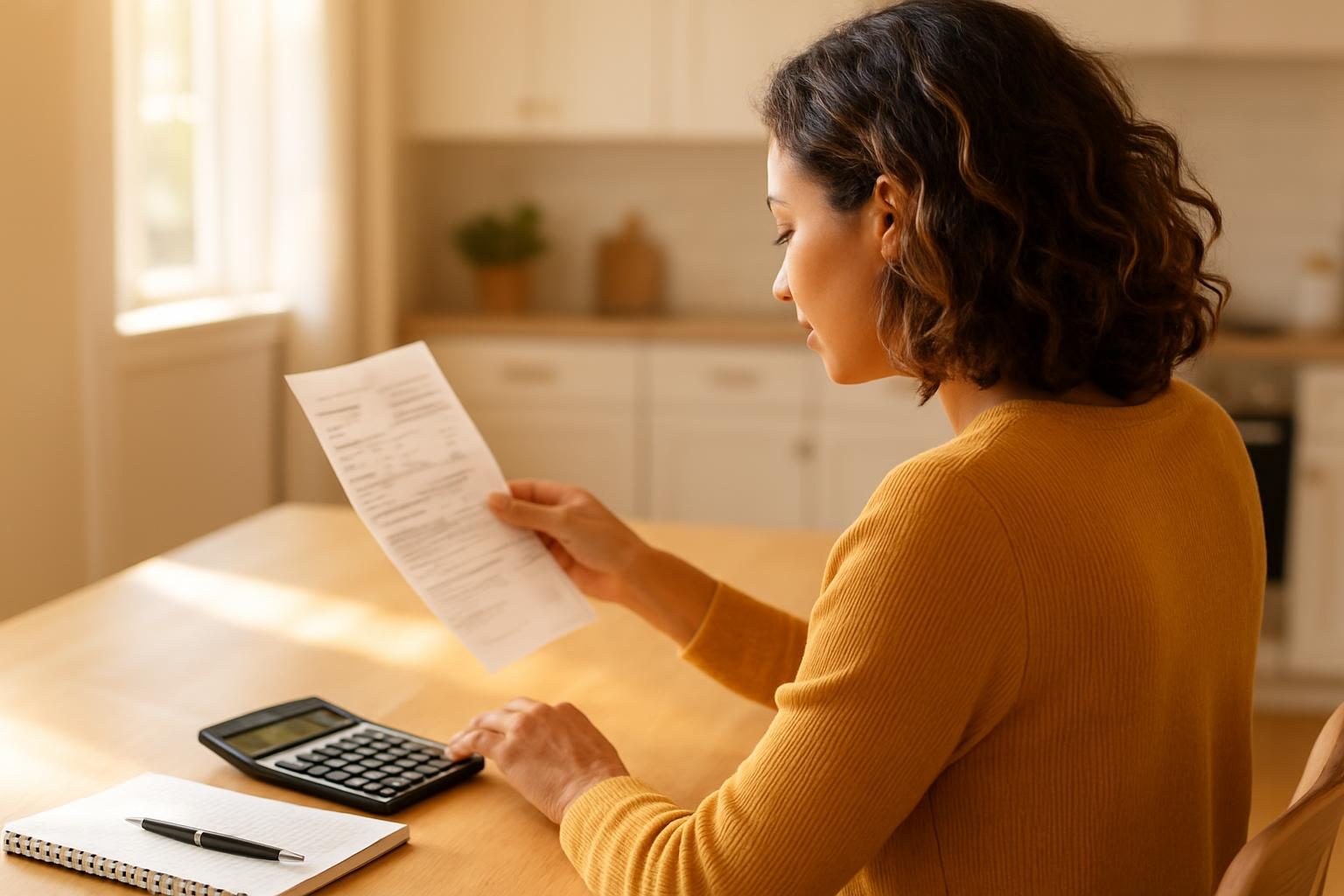
Nothing ruins a month like a surprise $300 electric bill in July or a gas bill that doubles in January. Budget billing promises to smooth those spikes into one steady payment. Whether it actually helps you depends on a few details most people never ask about.
Quick answer: Budget billing is a utility program that averages your estimated yearly cost into roughly equal monthly payments. It does not lower your total bill, but it makes your payments predictable and can protect you from seasonal shocks. It works best for households with big summer or winter swings and tight monthly budgets. Ask your utility how often it adjusts the payment and what happens to any balance.
What budget billing is (and what it is not)
Budget billing, sometimes called a levelized, equal or average payment plan, replaces your usage-based bill with a fixed monthly amount. Your utility estimates what you will owe over the next 12 months, then divides it across the year. You pay about the same each month whether it is a heat wave or a mild spring.
Here is the key point: it is not a discount. You are not paying less overall. You are paying the same yearly cost in a different shape. Think of it like a gym membership that spreads out an annual fee instead of charging you a big lump sum.
Behind the scenes, your actual usage is still tracked. The utility keeps a running balance comparing what you paid with what you really used. That balance is where the fine print lives, and we will get to it shortly.
How budget billing works, step by step
Every utility sets its own rules, but most follow a similar pattern.
- Your utility estimates your yearly cost. It usually looks at your past 12 months of usage at your address, plus current rates. New customers may get an estimate based on similar homes.
- That estimate is divided into monthly payments. You pay the same amount each month, or close to it.
- Your real usage is tracked in the background. Each month the utility compares what you used with what you paid.
- The plan is reviewed periodically. Many utilities review every few months or once a year and reset your payment if you are running over or under.
- A true-up settles any difference. If you underpaid, you may owe the gap. If you overpaid, you may get a credit or refund, depending on the utility’s rules.
The review and true-up steps are where people get surprised, so know your utility’s schedule before you enroll.
Budget billing doesn’t shrink your bill. It reshapes it into something you can plan around.
The pros of budget billing
Predictable payments make budgeting easier
If you pay rent, groceries and car costs from a fixed paycheck, a flat utility bill is much easier to plan around. No more guessing whether August will cost $90 or $240. This is the biggest benefit, and for many households it is worth a lot.
Less stress in peak months
Heating and cooling seasons can wipe out a tight budget. Budget billing spreads that pressure across all 12 months, so a cold snap or a heat wave does not trigger a crisis.
Fewer missed or late payments
When you know exactly what is due, it is easier to automate payments and avoid late fees. Steady amounts also make it simpler to set up autopay without worrying about overdrafts from an unexpectedly big bill.
Useful for fixed or irregular incomes
Retirees on fixed income and households with tight monthly cash flow often value the consistency more than any theoretical savings.
The cons and catches
You may overpay in low-use months
In spring and fall, your actual usage may be low, but you still pay the average. That is the trade-off for smaller bills in peak months. If your bill is pretty flat all year, you gain little.
Your payment can jump at review time
If you used more than expected, or rates went up, your utility may raise your payment at the next review. Some households see a noticeable increase after a hard winter or a hot summer.
A catch-up balance can build
If your estimate was too low, a balance accumulates. Depending on the utility, you may owe it at the end of the plan year, spread over later payments, or due if you leave the program. Ask exactly how this works before you sign up.
It can hide your usage signals
When your bill rises and falls with usage, it nudges you to cut back. A flat payment removes that signal. If you are trying to lower your energy use, you will need to track it another way, such as your online usage dashboard.
It can complicate other programs
Rules differ by utility and assistance program. If you get help from an energy assistance program or have a payment arrangement, ask whether budget billing can be combined with it.

Who budget billing helps most
It is a strong fit if you recognize yourself here:
- Your bills swing a lot between seasons, especially with electric heat, central air or a gas furnace.
- You live on a fixed or tight income and need predictable expenses.
- You have trouble absorbing one very large bill in a month.
- You want simple autopay with a number that does not change much.
When you may want to skip it
- Your bills are already steady all year.
- You are actively cutting usage and want the bill to reflect your progress.
- You are planning to move soon, since you could owe a true-up balance at closing.
- You are on a variable-rate plan or time-based pricing and expect big changes ahead.
Comparing your own numbers makes this easy. Pull up your last 12 bills and look at the highest and lowest months. If the gap is large, budget billing probably helps. If it is small, you may not need it. Our guide to the average electric bill by state and home size shows how your usage compares with similar homes.
Budget billing vs. other ways to manage your bill
| Option | What it does | Best for | Watch out for |
|---|---|---|---|
| Budget billing | Averages your yearly cost into equal payments | Households with big seasonal swings | Payment resets and true-up balances |
| Payment plan or arrangement | Spreads a past-due balance over time | Catching up after falling behind | Missing a payment may end the plan |
| Changing your due date | Aligns the bill with your payday | Cash-flow timing problems | Does not change the amount you owe |
| Assistance programs | Reduces or covers part of the bill | Low-income households | Eligibility rules and limited funds |
| Cutting usage | Lowers the actual cost | Anyone | Takes effort and sometimes upfront cost |
Budget billing evens things out, but only the last two options reduce what you actually pay. The best approach is often to combine them.
Money move: Before you enroll, call your utility and ask three things: how often the payment is reviewed, what happens to any balance if you underpay, and what happens if you leave the plan. Write down the answers and the rep’s name. Those three answers tell you whether the plan is a good deal for you.
How to sign up for budget billing
Most utilities make this easy, and it is usually free. Look for it in these places:
- Your online account. Search for “budget billing,” “levelized billing” or “equal payment plan” under billing or payment options.
- Your paper bill. The back or the bottom often lists the program and a phone number.
- Customer service. Call and ask, “Do you offer a budget billing or equal monthly payment plan, and am I eligible?”
Some utilities want your account to be current before you enroll. Others have a minimum history at your address. If you are behind, ask about a payment arrangement first. Our negotiation scripts and tactics guide has word-for-word phrasing for these calls.
What to say on the call
Try something like: “I would like to enroll in budget billing. Can you tell me my estimated monthly amount, when it will be reviewed, and how any difference between my payments and actual usage is handled?” Ask for the answer in writing or by email so you have a record.
Before you enroll, ask how often the payment resets and what happens to any balance if you leave.
Tips to make budget billing work for you
- Check your statement every month. Look for the running balance or “budget plan difference” line so a gap does not grow unnoticed.
- Keep lowering your usage. Better insulation, smarter thermostat settings and efficient appliances still pay off. See our complete guide to lowering your electric bill for steps that work in any home.
- Spot leaks and drains. Standby devices add up, which is covered in our upcoming piece on phantom energy. A free home energy audit from your utility can also find the biggest drains.
- Revisit the plan if your life changes. A new baby, a work-from-home job or a new appliance can change your usage. Ask for a review when that happens.
- Know your rate plan. If you are in a deregulated state, compare suppliers using our guide on how to choose an electricity provider. Lower rates and budget billing can work together.
If you are struggling to pay your utility bill
Budget billing can help you plan, but it will not solve a bill that is simply too high for your income. If you are worried about shutoffs or falling behind, reach out early. Utilities usually have more options for customers who call before an account goes far past due.
Start with these steps:
- Ask your utility about hardship programs, payment arrangements and any shutoff protections that apply in your state.
- Check LIHEAP, the federal Low Income Home Energy Assistance Program, which helps eligible households with heating and cooling costs. Confirm current eligibility and amounts with your state or local LIHEAP office.
- Call 211 or visit Benefits.gov to find local assistance, and contact your state utility commission if you need help with a dispute.
- Browse our roundup of programs that help with bills for more options.
For more energy-saving ideas, see our Utilities & Energy section. Our free Bill Savings Finder can also help you spot where your monthly budget has room to breathe.

Is budget billing right for you? A quick checklist
Run through these questions with your last year of bills in front of you:
- Is my highest monthly bill much bigger than my lowest?
- Does a big bill ever force me to skip other payments or use credit?
- Do I know how and when the plan is reviewed and reset?
- Do I understand what happens to any balance if I leave or move?
- Am I still working to lower my actual usage?
If you answered yes to the first two and have clear answers to the next two, budget billing is likely a good fit. If your bills are steady or you are not sure how the true-up works, hold off and ask more questions first.
Want help taming your utility bills?
Tell us what you pay now and we will follow up with ways to lower it, from do-it-yourself steps to vetted partner offers. Free, with no obligation.
Thanks, we have it.
We will look at what you pay and follow up soon. Meanwhile, try our free negotiation script builder.
Key takeaways
- Budget billing averages your yearly utility cost into steady monthly payments. It does not lower your total bill.
- It helps most if you have big seasonal swings, a tight monthly budget or a fixed income.
- Watch for payment resets and true-up balances, which can create surprises if you do not ask about them.
- Always ask how often the plan is reviewed and what happens if you leave.
- Real savings still come from using less energy, better rates and assistance programs.
- If you are struggling, contact your utility early and check LIHEAP, 211 and Benefits.gov.
Frequently asked questions
Does budget billing save money?
Not by itself. Budget billing spreads the same yearly cost into equal monthly payments, so your total is about the same. The benefit is predictability. Real savings come from using less energy, fixing leaks or drafts, finding better rates, or exploring options like whether solar is worth it.
Can I leave budget billing at any time?
Most utilities let you leave, but the rules vary. If you leave while you owe a built-up balance, you may have to pay it in full or on a short plan. Ask your utility how it handles a balance before you enroll or cancel.
Why did my budget billing payment suddenly go up?
Utilities usually review the plan every several months and reset it using your recent usage and current rates. If you used more energy, rates rose, or you had a big balance building, your payment can jump. Call and ask how the new amount was calculated.
Is budget billing available for gas, water and electricity?
Many utilities offer it for electricity and natural gas, and some offer it for water. Availability depends on your provider. Check your bill, your online account or your utility’s customer service line. For water savings, our upcoming guide on how to lower your water bill will help.
Is budget billing a good idea if I am behind on my bill?
It depends on the utility. Some require your account to be current, and some will fold past-due amounts into a payment plan instead. If you are behind, ask about payment arrangements and hardship help, and check LIHEAP and 211 for assistance.
Bill Reduction Institute is an independent publication, not a utility, bank or insurer. We may earn referral fees from some partners, which never changes our advice. Program rules and prices vary by area and provider, so confirm details with your utility or the official program office.