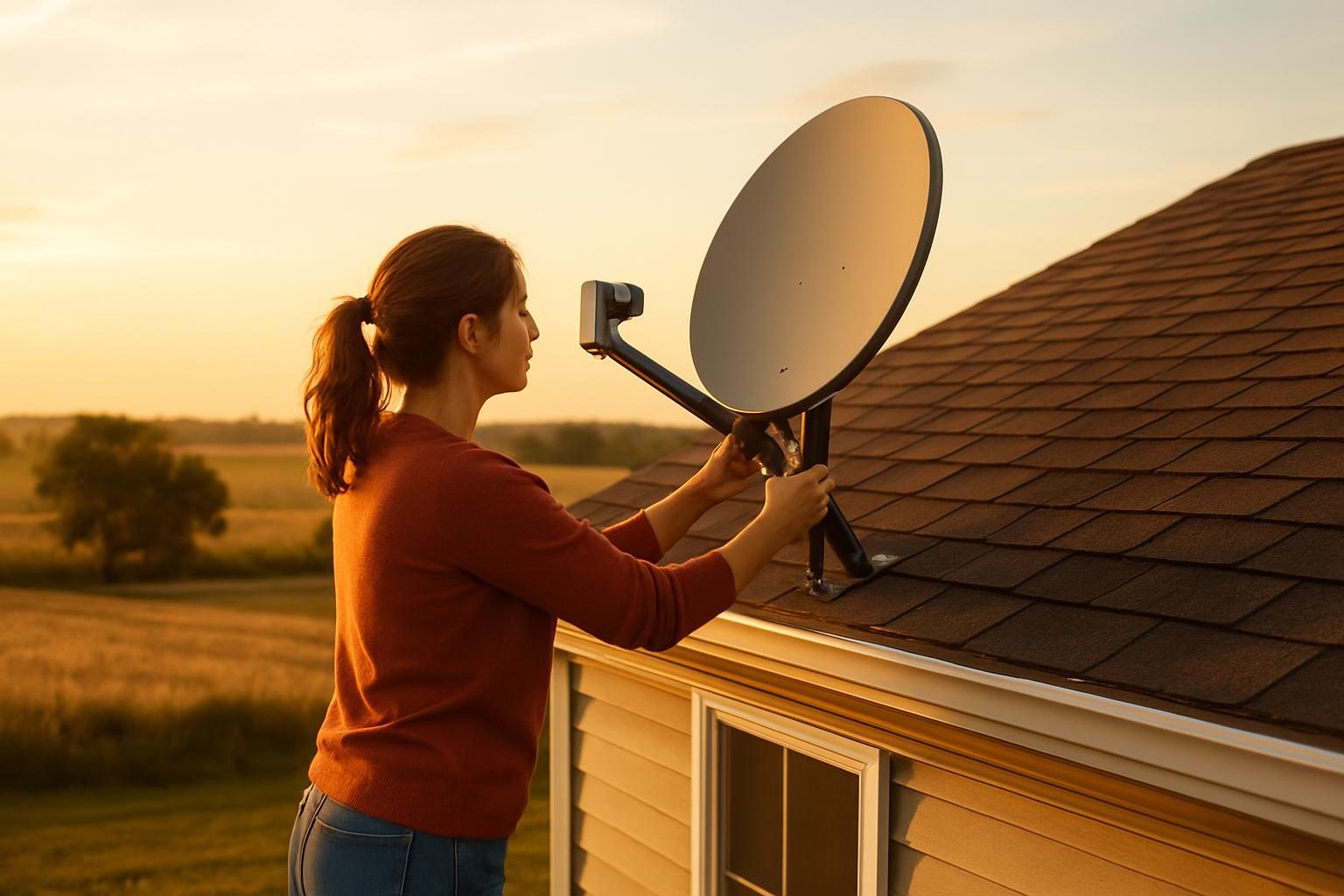
Starlink can be a lifeline when cable and fiber stop at the end of your road. It can also surprise you with a big upfront hardware bill and a monthly price that is higher than you expected. Here is what it typically costs, and how to keep it as low as possible.
Quick answer: Starlink cost usually means a monthly plan price of roughly $80 to $120 for home service, plus a one-time equipment charge that has often ranged from about $350 to $600 or more, plus shipping and taxes. Prices vary by address and change often, so check your exact quote on Starlink’s official site before ordering.
What Starlink costs: the big picture
Starlink has two kinds of charges: a monthly service fee and a one-time equipment fee for the dish and router. Unlike cable, there is no technician visit in most cases. You install it yourself, which saves a fee but means you need a clear view of the sky.
Starlink adjusts prices by region and demand, and it has changed plans, names and hardware prices repeatedly. Treat every number below as a typical range, not a quote.
Typical cost ranges at a glance
| Cost item | Typical range | Notes |
|---|---|---|
| Monthly residential service | ~$80-$120 | Varies by area; some places have lower-priced or limited-data tiers |
| Dish and router kit | ~$350-$600+ | One time; sometimes discounted or bundled with a promo |
| Shipping and handling | ~$0-$50+ | Sometimes free, sometimes added at checkout |
| Sales tax and fees | Varies by state and locality | Shown at checkout; applies to hardware and may apply to service |
| Mounts and accessories | ~$0-$100+ | Optional; roof, pole or extended cables if the kit’s default will not reach |
| Mobile or portable plans | Often priced differently | Check current terms if you plan to travel with the dish |
Starlink plan tiers
Starlink has offered several types of plans over time, including standard residential service, lower-priced options in some areas, and roaming or portable plans. The names and details change, so what you see on the site today may differ from what a friend paid last year.
Residential plans
This is the standard home plan, and it is what most people mean by Starlink cost. It generally has been priced in the $80 to $120 range per month, with higher prices in areas where the network is crowded and lower prices where there is spare capacity.
Lower-priced or limited-data options
In some areas, Starlink has offered a cheaper tier that gives you less priority or a capped amount of fast data. If you mostly browse, email and stream a bit, this can cut the bill noticeably. If you work from home, take video calls or stream in HD on several screens, a bigger plan may save you frustration.
Roaming and portable plans
If you want to take Starlink to a cabin, an RV or a boat, look at plans designed for that use and read the fine print about where the dish can be used. Prices and rules for these plans have shifted over time, so confirm current terms before buying.

The hidden costs people forget
The monthly price is only part of the story. These extras are where the first-month bill tends to jump.
- Equipment: The dish and router are a one-time purchase. It can feel like a down payment on your internet.
- Shipping and taxes: Shipping is sometimes free but not always, and sales tax is added at checkout based on where you live.
- Mounting hardware: If you cannot place the dish where it has a clear view of the sky, you may need a pole, a roof mount or longer cables.
- Extra router coverage: The included router may not reach every corner of a larger home, so some people add a mesh system.
- First-month proration: Your first bill may combine hardware, a partial month of service and taxes, which can look bigger than the plan price.
The monthly price is only the start; add up the hardware, shipping and taxes before you call it a deal.
When Starlink beats cable or fixed wireless
For most households with a choice, cable or fiber is cheaper per month and has no big hardware charge. Starlink earns its price when the alternatives are weak or missing.
Starlink is worth a close look if
- Cable and fiber do not reach your address.
- Your only option is slow DSL or an old satellite service with tight data caps.
- Fixed wireless or 5G home internet gives you spotty speeds or drops out during peak hours.
- You work from home and need more consistent speeds than what you have now.
Stick with cable, fiber or 5G if
- A wired provider covers your street and offers a plan under about $60 to $80 a month.
- You live somewhere with trees, tall buildings or a roofline that would block the sky.
- You want the lowest upfront cost.
Before you decide, compare what you would pay for each type. Our guide to 5G home internet vs cable shows how fixed wireless stacks up, and fiber vs cable internet covers the wired side. You can also see what typical households pay in Average Internet Bill per Month: Are You Overpaying?
Starlink vs other options: a quick comparison
| Option | Typical monthly cost | Upfront cost | Best for |
|---|---|---|---|
| Starlink | ~$80-$120 | Hardware, often several hundred dollars | Rural or underserved addresses |
| Cable | ~$50-$100+ (promos expire) | Usually low or none | Homes in cable areas |
| Fiber | ~$50-$90 | Usually none | Fast, steady speeds where available |
| 5G or fixed wireless | ~$40-$70 | Usually none | Good signal, lower-budget households |
| DSL | ~$40-$70 | Usually none | Light use when nothing else is available |
These are typical ranges only and vary by provider and address.

How to lower your Starlink cost
Starlink does not negotiate the way a cable company’s retention team might, but you still have levers to pull. Here is the order I would work through.
- Check your exact price. Enter your address on Starlink’s official site. The price shown there is the real one for your area.
- Compare plan tiers. If a lower-priced or limited-data plan is offered, decide honestly whether it fits how you use the internet.
- Look for equipment discounts. Hardware prices have gone up and down. If the price looks high, check back in a few weeks or look for official promotions.
- Test your sky view first. Starlink’s app can check obstructions. A bad spot can mean buying extra mounts, so plan placement before you pay.
- Skip add-ons you do not need. Extra cables, mounts and mesh pieces add up fast. Start with the basic kit and add only if you need to.
- Pause or adjust if you are away. If you only use the service part of the year, ask whether pausing or switching plans is an option and what it costs.
- Look at low-income internet help. Some households qualify for discounts on internet service through federal or state programs. Check Benefits.gov, call 211 or visit our guide to programs that help pay bills to see what might apply. Confirm current eligibility with the official program, since rules and funding change.
Money move: Before you buy Starlink, price out every other option at your address, including 5G home internet and fixed wireless. If one costs $30 to $50 less per month and works well, that is $360 to $600 a year back in your pocket and no hardware bill. If you already have cable or satellite internet like Spectrum, learn how to cancel Spectrum before switching.
If you already have Starlink and the bill feels high
Log in to your account and review exactly which plan you are on, what you are paying and whether any add-ons are attached. Compare that to what is currently offered for your address, because new plans and price changes happen often.
If there is a cheaper plan that fits your usage, switch. If there is not, check whether a wired or wireless alternative has come to your area since you signed up. New fiber builds and 5G towers can change your options overnight. Our complete playbook for lowering your internet bill walks through every step, and the cheapest internet providers guide can help you spot a better fit. Our Internet Speed & Price Checker is a quick way to see whether you are paying for more than you need.
If you are comparing with a wireless home plan, the T-Mobile Home Internet review will help you weigh price and speed. And if you are leaving a cable provider, a guide to hidden internet fees can help you catch charges on your old bill that you will not have to pay again.
How much speed do you actually need?
It is easy to overbuy. A household that mostly streams, browses and video-calls often does fine without the most expensive plan. Check how much internet speed you need before picking a tier, and remember that satellite performance can vary with weather, obstructions and local demand.
Verify prices before you order
Starlink changes plans, hardware and pricing regularly, and it can differ from one ZIP code to the next. Always confirm the monthly price, equipment cost, shipping, taxes and return policy on the official checkout page before you pay. Take a screenshot of the terms so you have a record.
Bill Reduction Institute is an independent publication. We may earn a referral fee from some partners, and we say so, but we never rank an option based on that. For more internet and TV savings, browse our Internet & TV category.
Paying too much for internet?
Tell us what you pay now and we will follow up with ways to lower it, from do-it-yourself steps to vetted partner offers. Free, with no obligation.
Thanks, we have it.
We will look at what you pay and follow up soon. Meanwhile, try our free negotiation script builder.
Key takeaways
- Expect roughly $80 to $120 a month for home service, plus a one-time hardware cost that has often been several hundred dollars.
- Shipping, taxes and mounting gear can make your first bill much larger than the plan price.
- Starlink usually beats other options only where cable, fiber and good fixed wireless are unavailable.
- Compare plan tiers, check your sky view and skip unneeded add-ons to keep costs down.
- Prices vary by address and change often, so verify everything on the official checkout page before you pay.
- Low-income internet help may be available; confirm through Benefits.gov or 211.
Frequently asked questions
How much does Starlink cost per month?
Residential plans have typically run from roughly $80 to $120 a month, with some areas offering lower-priced or limited-data tiers and higher prices where demand is strong. Prices vary by location and change often. Enter your address on Starlink’s official site to see the exact monthly price for your home.
Is there a Starlink contract or cancellation fee?
Starlink has generally been sold month to month rather than on a long contract, and you can usually pause or cancel from your account. Policies on equipment returns and refunds can change, so read the current terms at checkout before you pay for anything.
Can I use my own router with Starlink?
Often yes. Many Starlink kits include a router, and some setups let you add your own router or mesh system for better coverage, sometimes with an adapter sold separately. Check which kit you are buying and whether it supports bypass or Ethernet connections.
Is Starlink cheaper than cable or fiber?
Usually not. Cable and fiber often cost less per month and have no upfront hardware cost. Starlink makes the most sense where cable and fiber are not offered, where your only options are slow DSL, or where a fixed wireless or 5G home plan is unreliable at your address. If you do have cable or fiber available, learn how to cancel Xfinity without fees before switching.
Are there ways to lower my Starlink bill?
Yes. Look for a lower-priced plan or a limited-data tier if your area offers one, watch for equipment discounts, skip add-ons you do not need, and pause service during months you are away if that option is available. Also confirm whether you qualify for low-income internet help through the programs listed on Benefits.gov or by calling 211.