
That “free” phone with $0 down and $0 interest? It often comes with strings that cost you hundreds over time. Before you sign another installment agreement, it pays to see what phone financing vs buying outright really costs.
Quick answer: Most carrier financing charges no interest, so the phone itself costs about the same as buying outright. The real cost is the lock-in: bill credits that vanish if you leave, a balance due if you switch, and plans that may cost more than you need. Buying outright (or financing at true 0% with no strings) usually leaves you more free to shop for a cheaper plan. Costs vary by phone, carrier and area.
How phone financing actually works
When you finance a phone through a carrier, you split the phone’s price into monthly payments, commonly over 24 to 36 months. Many carriers advertise 0% interest, meaning you pay the sticker price spread out, not extra for borrowing.
That sounds like a good deal, and sometimes it is. But the monthly payment is only one piece. Here is what else tends to come with it.
The pieces to look for
- Installment payments: The phone price divided by the number of months, added to your bill.
- Bill credits: Promotional discounts applied monthly over the whole term, often to offset the phone cost. They typically end if you cancel or change plans.
- Plan requirements: Some deals only apply on certain, often pricier, plans.
- Credit check: Carriers commonly check your credit before approving financing.
- Remaining balance: If you leave early, you generally owe whatever is left.
How buying outright works
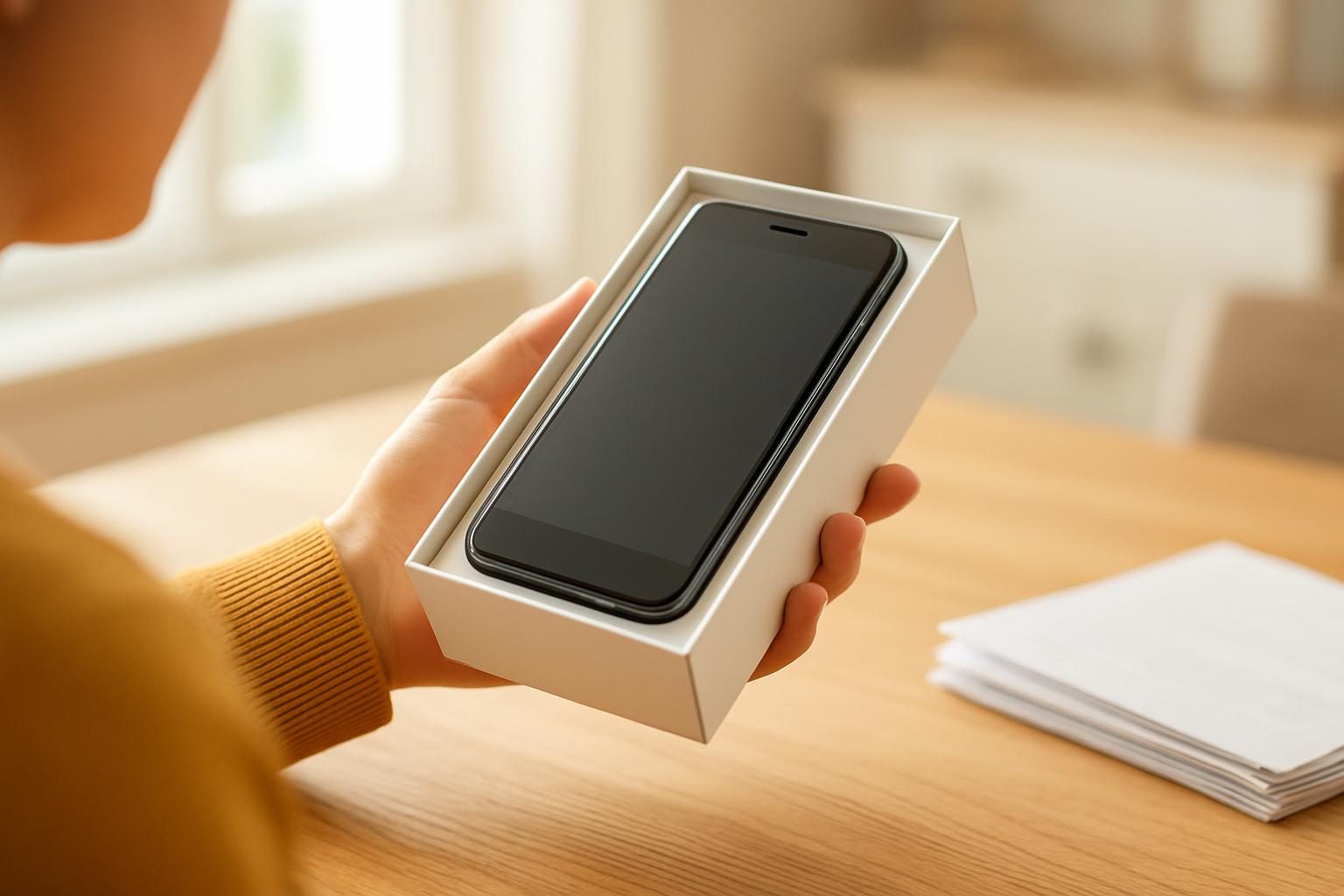
Buying outright means you pay the full price at purchase, from a carrier, manufacturer, retailer or secondhand seller. You own the phone free and clear, and it is typically unlocked or easy to unlock, so you can take it to any compatible network—including alternatives like Google Fi.
The downside is obvious: a big upfront payment. Flagship phones can run well over $800, while solid midrange models often cost a few hundred dollars. Prices vary by model and seller.
A phone with no interest can still cost you plenty if it locks you into a plan you would never choose.
Phone financing vs buying outright: the real cost compared
Here is a side-by-side look at the typical trade-offs. These are general patterns, not guarantees, and terms differ by carrier and offer.
| Factor | Carrier financing | Buying outright |
|---|---|---|
| Upfront cost | Low or none | Full price (or a deposit) |
| Interest | Often 0%, but not always | None, unless you use a credit card |
| Freedom to switch carriers | Limited until paid off | Usually free to switch |
| Plan options | May require specific plans | Any compatible plan |
| Early exit | Remaining balance due, credits may stop | No penalty |
| Credit impact | Credit check, possible reporting | None if paid in cash |
| Total cost over 2-3 years | Phone price plus likely higher plan | Phone price plus the plan you choose |
The pattern to notice: the phone’s price is about the same either way. The difference shows up in the monthly plan you are steered toward and how hard it is to leave.
A simple example with approximate numbers
Let’s say a phone costs about $800. Financed over 36 months at 0%, that’s roughly $22 a month for the device. Now suppose the best deal requires a $75 plan, while a no-contract plan you’d be happy with costs about $30. These are illustrative numbers, and real prices vary.
Over three years, the financed path adds up to the $800 phone plus the pricier plan. The outright path is the $800 phone plus the cheaper plan. The gap can run to well over $1,000 depending on the plan difference. Run your own version with our Cell Phone Plan Savings Calculator.
Money move: Before accepting any financed deal, ask the rep to quote the total over the full term: device payments, the required plan, and any fees. Then price the same phone bought outright with a budget plan. Compare the two totals, not the monthly payments.

The hidden costs of financing
Bill credits that disappear
Many “free phone” deals pay you back through monthly credits instead of a discount at purchase. If you cancel, downgrade, or switch carriers before the term ends, the credits usually stop but the full balance still comes due. That is the heart of the lock-in.
Plans that cost more than you need
Promotions are often tied to premium plans with more data, perks or streaming add-ons than you may use. If you are not sure what you need, our guide on how much data you actually need can help you right-size it.
Credit and fees
Some financing involves a credit check, and a few carriers charge activation or upgrade fees. Taxes and other charges can also pad the total, which is why your bill often runs higher than the advertised price. We cover that in why your phone bill is higher than the plan price.
The locked phone problem
Financed phones are typically locked to the carrier until they are paid off. Even after payoff, you may need to request an unlock. See how to unlock your phone so you can switch when a better deal comes along.
When financing can make sense
Financing is not always a trap. It can be a reasonable choice in specific situations.
- You genuinely cannot pay the full price now and need a working phone for work or safety.
- The deal is true 0% interest with no required premium plan, and you plan to stay for the full term.
- The credits really do beat the cost of buying and using a cheaper plan elsewhere (do the math, as shown above).
- You are comfortable with your carrier and have no plans to leave.
If your budget is tight, avoid high-interest options such as store credit cards or lease-to-own offers, which can cost far more than the phone is worth. Check the APR (annual percentage rate, the yearly cost of borrowing) and all fees before agreeing.
When buying outright wins
- You want the freedom to switch to a cheaper carrier whenever you like.
- You are interested in MVNO budget plans or prepaid plans, which often cost much less than major-carrier postpaid plans.
- You prefer a refurbished, used or last-year model to cut the price.
- You want to avoid a credit check and a balance hanging over you.
Owning your phone outright is what gives you the power to walk away from a bad plan.
How to buy outright without a big upfront hit
Paying full price at once is the main barrier. Here are ways to soften it.
- Lower the target price. Consider a midrange phone or a model from a previous generation. A refurbished phone from a reputable seller, ideally with a warranty, can cost noticeably less.
- Check the unlocked options. Make sure the phone works with the network you plan to use. Most major networks publish compatibility info.
- Save in small steps. Setting aside even $20 to $40 a month toward your next phone can fund a decent one over a year or so.
- Look for 0% retailer or manufacturer plans. Some sellers offer payment plans not tied to a carrier. Confirm there is truly no interest and no fees, and that you are not locked to a plan.
- Trade in your old phone. Trade-in values vary widely, so get a couple of quotes.
- Pair it with a cheaper plan. The monthly savings can offset the upfront cost. See our cheapest cell phone plans guide for ideas.
What if you are already financing a phone?
You are not stuck, but check before you move. Find your remaining balance, your end date, and how any bill credits are handled if you leave. Your carrier’s app or customer service can tell you.
If you are close to payoff, it may be worth waiting. If you have a long way to go, compare your total remaining cost against switching. Our guide to switching carriers and keeping your number walks you through the process.
What to say if you want a better deal
Calling your carrier can sometimes improve terms, though results vary. Try a script like this:
“I’m reviewing my account and comparing my total cost to other options. Can you tell me my remaining device balance and whether I’m eligible for any loyalty offers or a lower-priced plan without affecting my current credits?”
For more wording you can use, see our bill negotiation scripts and tactics and the upcoming cell phone bill negotiation script.
Carrier-specific tips are here too: Verizon, T-Mobile and AT&T.
Protect the phone you buy
Whether you finance or buy outright, a cracked screen can wreck the math. Before paying monthly for coverage, read whether phone insurance is worth it and consider a sturdy case and screen protector as a cheaper first line of defense.
For the full picture of trimming your monthly spend, start with our hub guide to lowering your cell phone bill, or browse the Cell Phone Bills category.
Quick decision guide
| Your situation | Likely better fit |
|---|---|
| Want max flexibility and lowest monthly plan | Buy outright, pair with an MVNO or prepaid plan |
| Need a phone now, little cash | True 0% financing with no strings, or a cheaper used or refurbished phone |
| Happy with your carrier long-term | Financing can work if the total cost checks out |
| Upgrade every year | Run the numbers carefully; trade-in promos often tie you to ongoing plans |
| Tight budget | Buy a lower-cost phone and avoid high-interest lease-to-own deals |
If money is tight right now, you may also qualify for help with phone service. Check our help paying bills guide and the official Lifeline program site to confirm current eligibility and benefits.
Paying too much for your phone?
Tell us what you pay now and we will follow up with ways to lower it, from do-it-yourself steps to vetted partner offers. Free, with no obligation.
Thanks, we have it.
We will look at what you pay and follow up soon. Meanwhile, try our free negotiation script builder.
Key takeaways
- Carrier financing is usually 0% interest, so the phone costs about the same either way. The extra cost hides in the plan and the lock-in.
- Bill credits typically stop if you leave early, and the remaining balance generally becomes due.
- Always compare the total cost over the full term, not the monthly payment.
- Buying outright, especially refurbished or midrange, gives you freedom to pick a cheaper plan.
- If you need financing, look for true 0% with no required premium plan, and avoid high-interest lease-to-own deals.
- Prices and terms vary by phone, carrier and area, so verify details before you sign.
Frequently asked questions
Is it cheaper to finance a phone or buy it outright?
Buying outright is usually cheaper or equal in total cost, because most carrier installment plans charge 0% interest but tie you to a plan and bill credits. Financing only wins if the promotional credits truly beat what you’d pay elsewhere, and only if you stay for the full term.
Does financing a phone hurt my credit?
It can. Carriers often run a credit check, and an installment plan can show up as an account on your credit report, depending on the carrier and your state. Missed payments can hurt your score. Ask the carrier what they report before you sign.
Can I switch carriers if I still owe money on my phone?
You can leave, but the remaining balance usually becomes due, often all at once, and any monthly promotional credits typically stop. That is how financing creates a lock-in. Check your remaining balance and credit terms before you cancel.
What is the best way to buy a phone outright without a big upfront payment?
Consider a refurbished or last-year model, a manufacturer or retailer payment plan with 0% interest, or saving a small amount each month toward a cash purchase. You might also explore budget carriers like Mint Mobile to reduce plan costs. Compare any financing offer’s APR (the yearly interest rate) and fees, and avoid high-interest store cards.
Do I still need to pay taxes and fees if I buy outright?
Yes. Sales tax usually applies to the full price of the phone when you buy it, and some carrier-financed phones have tax collected up front. Rules vary by state, so check your receipt or ask the seller what is included.